

After nearly three decades in the cleaning and building services industry, I’ve learned something simple but important:
Most people don’t really misunderstand cleaning because they don’t care.
They misunderstand it because no one ever explained it clearly in real, practical terms related to the type of cleaning needed.
I’ve walked into homes that looked “clean enough” on the surface—but the air felt heavy, corners were forgotten, and buildup told a different story. I’ve also seen offices that were spotless every morning, yet still struggled with odors, allergies, or recurring complaints from staff.
The truth is, “clean” is not one thing. There are levels to it. And understanding those key differences can save you time, money, and even health issues.
Let’s talk about it in a way that actually makes sense.
Key Takeaways:
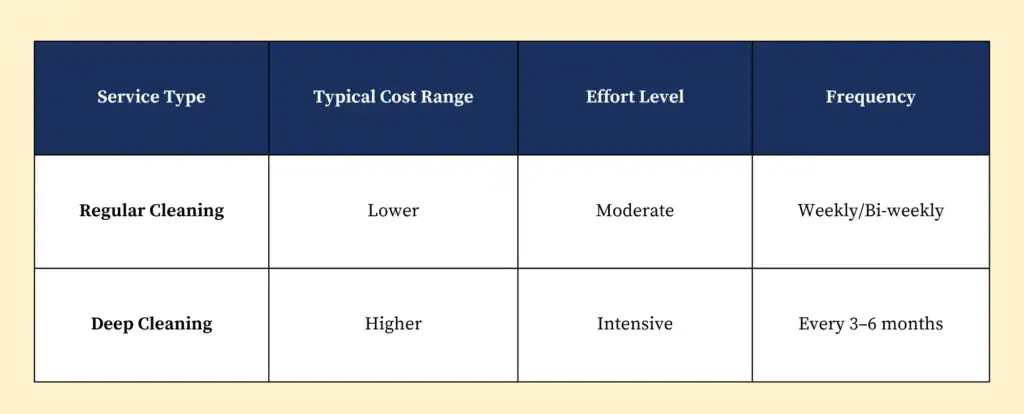
Routine Maintenance vs. Total Restoration: Regular cleaning is a frequent maintenance service that handles visible surfaces like floors and counters to keep a home tidy. Deep cleaning is a detail-heavy restoration service that removes hidden grime from air vents, baseboards, and behind appliances to reset the space.
Surface Cleaning vs. Air Quality: While regular cleaning manages daily mess, deep cleaning directly improves indoor air quality. By removing accumulated dust and allergens from neglected areas, deep cleaning can combat the EPA-documented reality that indoor air is often 2–5x more polluted than outdoor air.
Frequency and Timing: For optimal home maintenance, schedule regular cleaning weekly or bi-weekly to maintain order. Invest in a professional deep clean every 3–6 months, or specifically during move-ins, post-renovations, or when seasonal allergies begin to flare.
Regular Cleaning vs Deep Cleaning: Which One Do You Need?
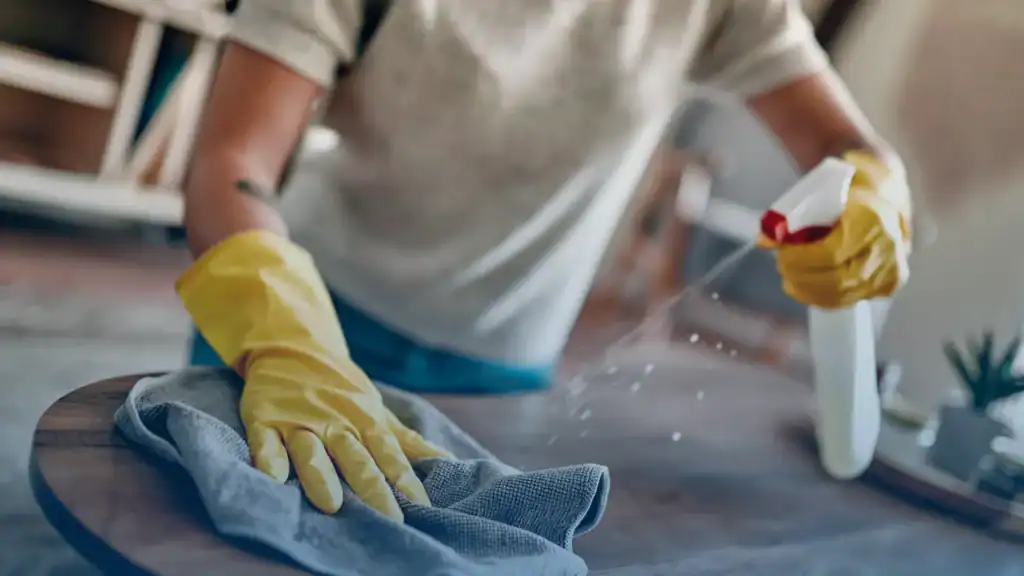
Regular cleaning is what most people are familiar with. It’s the ongoing care from a house cleaning service that keeps a space livable and presentable.
Think of it like brushing your teeth. You don’t wait until there’s a problem—you maintain it daily or weekly so things don’t spiral.
In the field, regular cleaning usually includes:
Sweeping and mopping floors
Dusting visible surfaces
Wiping kitchen counters
Cleaning bathroom fixtures
Taking out trash
Light vacuuming
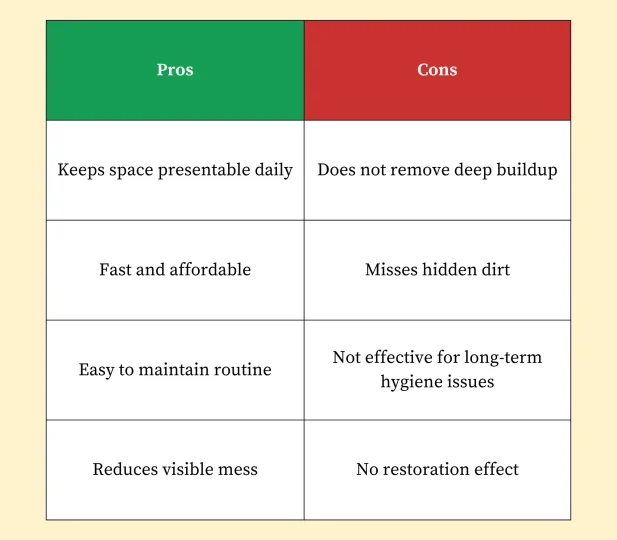
It’s about maintaining order, not restoring a space.
I remember a client in New Jersey—a busy working mom with three kids. She once told me, “We clean all the time, but it still never feels clean.”
When we looked closer, the issue wasn’t effort. It was expectation. She was doing regular cleaning perfectly—but expecting deep cleaning results.
That’s a common gap I see.
Regular cleaning keeps things under control. But it doesn’t reach everything.
And that distinction matters more than people realize.
Deep Cleaning: Where Real Transformation Happens
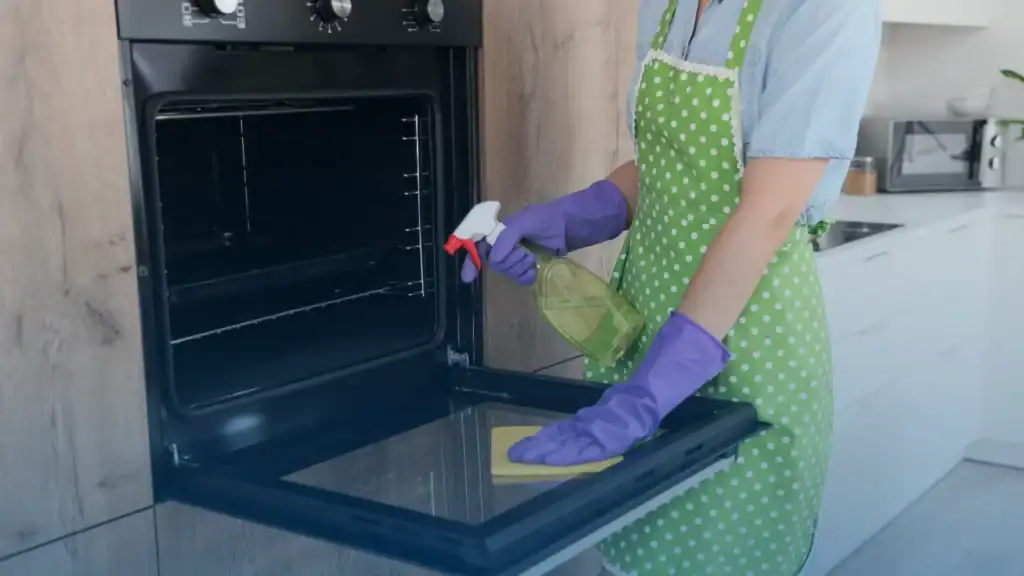
Deep cleaning is a different level entirely. If regular cleaning is maintenance, deep cleaning is restoration.
This is where we go beyond what the eye can easily see.
We’re talking about areas like:
- Baseboards that haven’t been touched in months
- Inside ovens and refrigerators
- Behind and under heavy appliances
- Air vents and ceiling fans
- Tile grout that has slowly darkened over time
- Window tracks filled with buildup
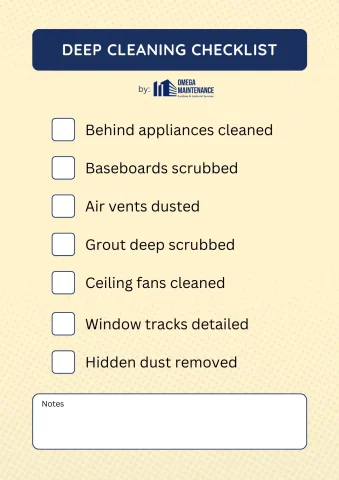
It’s not just cleaning surfaces. It’s resetting a space.
I still remember a commercial facility we serviced years ago—pre-pandemic, which required a specific type of cleaning. The management called us because employees kept complaining about headaches and allergies.
The regular janitorial team was doing their job daily, but no one had done a full deep clean in over a year.
When we started, the amount of hidden dust in vents and high surfaces was surprising even to the staff, highlighting the need for a regular house cleaning.
Within days of completing the deep clean, complaints dropped significantly, showcasing the effectiveness of a professional cleaning service.
It wasn’t magic—it was the removal of buildup that regular cleaning simply couldn’t reach during the cleaning session.
Deep cleaning is what you do when you want a space to feel new again, not just tidy.
The Real Difference Between Deep Cleaning and Regular Cleaning
Let me break this down in the simplest way I explain it to clients: the key differences between regular and deep cleaning.
Regular cleaning maintains what you see.
Deep cleaning restores what you don’t see.
Here’s how they compare in real terms:
Regular cleaning is:
- Frequent
- Light to moderate effort
- Focused on visible surfaces
- Faster to complete
Deep cleaning is:
- Less frequent
- Detail-heavy
- Focused on hidden buildup
- Time-intensive and thorough
One is about consistency.
The other is about reset.
Both are important. But they serve different purposes.
In my experience, problems happen when people expect one to replace the other. That’s where frustration starts.
Why This Difference Matters More Than You Think
Most clients don’t call us because they “don’t know how to clean.” They call us because something changed.
Sometimes it’s:
- A move-in or move-out situation
- A renovation that left dust everywhere
- Seasonal allergies suddenly getting worse
- A workspace that feels “off” despite being cleaned regularly
One homeowner once told me, “I clean every week, but my house still feels dusty no matter what I do.”
When we inspected the home, the issue wasn’t lack of effort but rather the need for a deep cleaning service.
It was accumulation in places regular cleaning never touched—air vents, ceiling edges, and behind furniture.
That’s the moment people usually understand: cleaning isn’t just about effort. It’s about depth.
Health and Air Quality: The Part People Often Overlook
This is where things get serious.
Indoor environments naturally collect dust, allergens, and particles over time. Even in well-maintained spaces, buildup happens gradually.
“According to EPA indoor air quality findings, indoor air can be 2–5x more polluted than outdoor air due to trapped dust, chemicals, and allergens.
From industry findings and environmental health data, indoor air can often contain more pollutants than outdoor air. That doesn’t mean your space is unsafe—it just means maintenance matters more than people think.
Regular cleaning helps reduce surface dust and daily mess.
But deep cleaning helps remove hidden buildup that affects air quality.
In real-world terms, I’ve seen improvements in:
- Allergy symptoms in homes
- Employee comfort in offices
- General “freshness” of indoor environments
Especially in spaces with carpets, HVAC systems, or high foot traffic, buildup is inevitable.
This is not about fear. It’s about awareness.
When Do You Actually Need A Regular Cleaning vs Deep Cleaning?

One of the most common questions I get as a service provider is:
“How do I know which cleaning type I need?”
Here’s how I usually guide clients.
You need regular cleaning if:
Your space is already in good condition
You’re maintaining cleanliness weekly or bi-weekly
There are no major buildup issues
You need deep cleaning if:
-
You’re moving into a new place
-
It’s been months since a full reset
-
You’ve had construction or renovation work
-
Allergies or odors are becoming noticeable
-
You want a “fresh start” feeling
A good rule of thumb I often share:
If you can see it, regular cleaning handles it.
If you can feel it, smell it, or sense it’s there—it’s deep cleaning territory.
Residential vs Commercial Expectations Are Not the Same
One thing I’ve learned through both residential and commercial work is that expectations change depending on the environment.
In homes, cleaning is about comfort and peace of mind.
In offices and facilities, it’s about productivity, safety, and perception.
In healthcare environments, it becomes even more critical. During my years working in specialty sanitation, including medical-grade disinfection, I’ve seen how strict cleaning protocols directly impact safety outcomes.
That’s why in professional settings, deep cleaning is not optional—it’s part of the operational integrity of cleaning companies.
Regular cleaning keeps your space and things functioning, but a deep clean goes beyond for long-term health.
Yes, deep cleaning takes more time but deep cleaning keeps things safe.
The Cost Misunderstanding Most People Have
Let’s talk about something practical: cost.
Regular cleaning is typically more affordable because it’s ongoing and less labor-intensive.
Deep cleaning costs more because:
- It takes more time to achieve a thorough clean than many anticipate.
- It requires more detailed work
- Deep cleaning uses special tools or products
- It targets areas that are harder to access during a thorough clean.
I often tell clients: you’re not just paying for cleaning—you’re paying for time, detail, and restoration.
The mistake I see people make is avoiding deep cleaning and hiring a professional cleaning service for too long to save money, only to end up needing more intensive work later.
In reality, both services work best together, not as substitutes.
A Lesson I Learned Early in My Career
When I first started Semper Fi Cleaning Systems, Now Omega Maintenance, I took on a small office contract that taught me something I never forgot.
We were hired for regular cleaning. Everything looked fine on paper.
But over time, the client kept reporting persistent dust issues.
WHY would there be persistent dust issues if WE are the ones cleaning?
To the reader, who is not a professional cleaner, this might seem as if we were not cleaning properly and kept leaving dust behind. This has to be re-worded.
The real story is that we were hired to perform a one-time carpet cleaning.
While we were there to shampoo the carpet, I noticed the offices could be much cleaner and it occurred to me that maybe we could also deep clean the office and give the customer a taste of the level of cleaning we can deliver and surprise them when they walked in Monday morning.
And THAT was the beginning of our commercial and office cleaning service.
The customer was shocked at how clean the offices were, how shiny the windows and doors were, and how fresh the entire building smelled and felt.
They had never experienced such a clean workspace before.
Since then, Omega Maintenance Facilities and Janitorial Services has always performed a deep cleaning at the inception of every new customer.
It establishes a baseline of cleaning to be maintained throughout time.
The customer understands this is how clean and fresh they will feel every day moving forward with the Omega Maintenance Team.
That experience shaped how I approach every client today. It’s never just about cleaning. It’s about understanding what the space actually needs.
Final Thoughts: It’s Not Either-Or, It’s Both
If there’s one message I want readers to take from this, it’s this:
Regular cleaning and deep cleaning are not competitors. They are partners.
One keeps life manageable.
The other keeps life refreshed.
When both regular maintenance and deep cleaning are done correctly and at the right time, spaces don’t just look clean—they feel better to live and work in.
Conclusion: Why Professional Cleaning Matters
Understanding the difference between deep cleaning and regular cleaning is not just about terminology. It’s about making better decisions for your home or business.
At Omega Maintenance Corp, we emphasize the importance of both regular and deep cleaning. We’ve spent decades helping families, businesses, and facilities understand what their spaces truly need—not just what looks clean on the surface.
Under the leadership of my experience in both Semper Fi Cleaning Systems, Inc. and Omega Maintenance Corp, our mission has always been simple: deliver cleaning solutions that go beyond appearance and focus on long-term health, safety, and comfort.
Because at the end of the day, a properly maintained space doesn’t just look better—it supports better living, better working, and better peace of mind.
Frequently Asked Questions
1. How does deep cleaning vs regular cleaning actually differ in terms of scope and results?
The simplest way to look at it is: regular cleaning maintains what you see, while deep cleaning restores what you don’t see.
Regular cleaning involves routine tasks like sweeping, mopping, and dusting visible surfaces to keep a space presentable. Deep cleaning is a detail-heavy “reset” that targets hidden buildup in areas like baseboards, air vents, grout, and behind large appliances.
2. How often should I schedule a deep clean?
While regular cleaning should happen weekly or bi-weekly to maintain order, a deep clean is typically recommended every 3 to 6 months.
However, you may need one sooner if you are moving into a new home, completing a renovation, or noticing an increase in dust and allergy symptoms.
3. Why does my home still feel "off" even though I clean it every week?
This is usually a sign of accumulation in neglected areas. If the air feels heavy or dust reappears quickly, the culprit is often hidden buildup in air vents, ceiling fans, and window tracks.
Regular cleaning keeps the surface tidy, but it doesn’t remove the deep-seated allergens and dust that only a professional deep clean can reach.
4. Is deep cleaning worth the higher price tag?
Yes, because you are paying for time, intensive labor, and restoration. Deep cleaning requires specialized tools and significantly more man-hours compared to standard cleaning to reach difficult areas.
By investing in a deep clean periodically, you prevent long-term damage (like stained grout or degraded surfaces) and improve indoor air quality, which can save you money on repairs and health-related costs later.
5. Can a deep clean actually improve my health or indoor air quality?
Absolutely. According to EPA findings, indoor air can be improved significantly with regular cleaning tasks. 2–5x more polluted than outdoor air due to trapped allergens and chemicals.
Deep cleaning removes the “invisible” triggers—like dust mites in vents and grime behind furniture—that regular cleaning leaves behind, often leading to a noticeable reduction in allergy and respiratory symptoms.